
· by Michael Blair, Nashville's Gutters
Seamless aluminum covers most Nashville houses well. Before anyone weighs copper against steel, two things in an aluminum quote deserve a look: how thick the metal is, and how many joints the finished run will have.
Does gutter thickness matter more than the metal?
Aluminum gutter is not one product, and its thickness decides more than the choice of metal does. Alside’s sell sheet for its aluminum gutter coil offers the coil in two thicknesses, .027 and .032 of an inch, in both five-inch and six-inch gutter. Thickness is what resists a dent, and the Building America Solution Center’s guide to gutters and downspouts points out that aluminum and vinyl gutters can crack or dent when a ladder or a tree branch hits them.
Ask which thickness is quoted. Two estimates for the same house can differ by that number alone, and when it is left off the paper there is no way to compare them.
How is seamless gutter different from sectional?
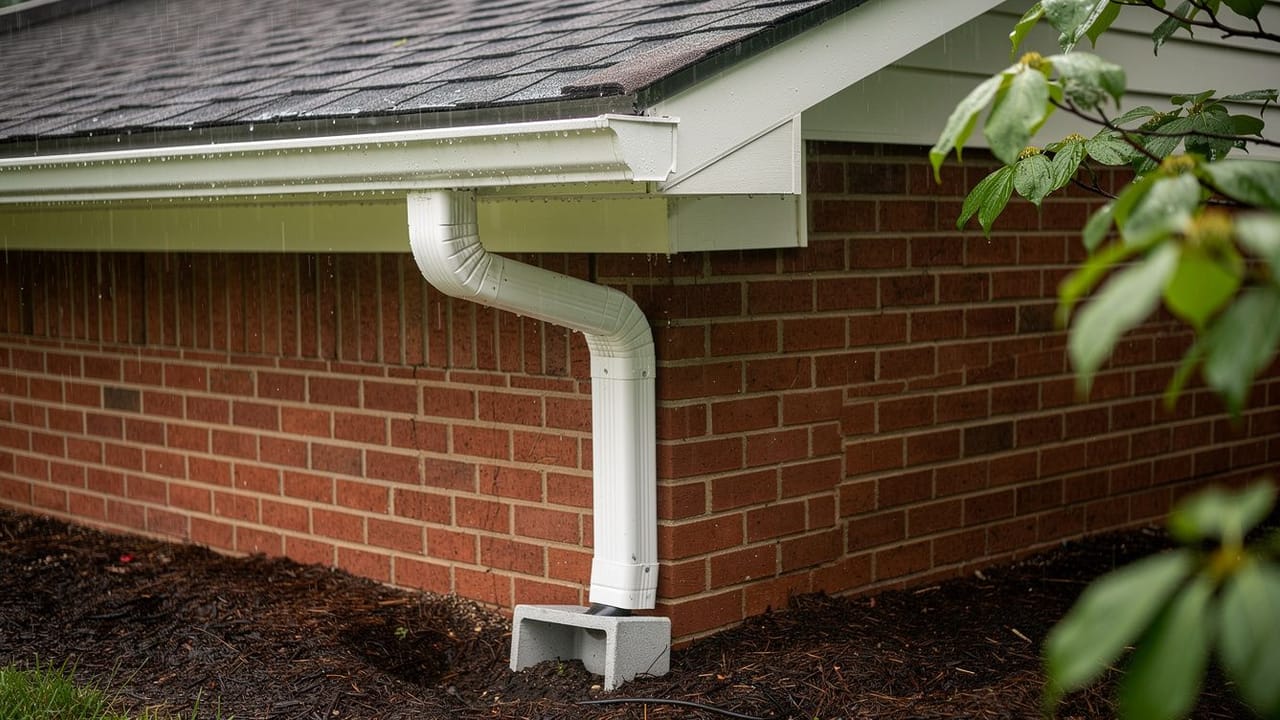
Seamless gutter is made at the house. According to Alside’s gutters and downspouts page, the installer fabricates it on site from color-matched gutter coil, and the company’s sell sheet says a system made that way has fewer joints than sectional gutter. What joints it does have sit at the corners, the end caps and the outlets, which is how we build our seamless gutter installations.
Sectional gutter arrives in lengths that are joined with slip-joint connectors, so a long eave carries joints in the middle of the run as well as at its ends. Every one of them is a sealed connection that has to ride out our winters: the National Weather Service’s Nashville climate summary averages 67 days a year with a low at or below 32 degrees, while the normal January high is 49. If a run is already dripping at a joint, our post on leaks at seams, corners and end caps walks through where to look.
- The heavier aluminum coil over the thinner one
- Seamless over sectional wherever the run allows
- Hangers screwed into sound fascia, not spikes through the gutter face
- Copper where the look of the house calls for it
- Galvanized or aluminum-zinc steel where impact resistance matters
Copper and steel
Copper weathers to a green patina, a finish prized long enough that the National Park Service’s Preservation Brief 4 on historic roofing records 19th-century tin roofs being painted to imitate it. The same brief warns that copper and iron in contact corrode each other, so a copper gutter wants copper or other compatible hangers and fasteners, never plain steel. It suits a period house where the eave is part of the architecture.
Galvanized steel, and steel coated in an aluminum-zinc alloy, is the choice where knocks are expected; the Building America guide says copper and galvanized steel stand up to ladders and branches better than aluminum. Its life is the life of its coating. Preservation Brief 4 says plated iron lasts only as long as the coating stays intact, and once that coating is worn or damaged the exposed metal rusts, so a scratch or a cut through it is where we look first.
Hangers and fascia
Alside’s sheet lists both ways of holding a gutter up: the spike, a metal post driven through the gutter, and hangers that fasten with a screw. We hang ours on hidden hangers screwed into the fascia. The installation matters to the warranty too, since the sheet says Alside’s twenty-year limited warranty on its aluminum rainware does not cover damage caused by faulty or improper installation.
If the fascia is soft or rotted, a new gutter has nothing sound to hold, so the board gets replaced first. Our fascia and soffit repair handles that, and the post on fascia rot behind the gutter shows what we find when the old gutter comes off. When you ask us for an estimate, we check the fascia before we measure for gutter.
Sources
- Alside, Aluminum Gutter Coil and Rainware Systems sell sheet (2024) — Coil in .027 and .032 thickness, five- and six-inch; seamless fabricated on site with fewer joints than sectional; miters, end caps, outlets and slip-joint connectors; spikes and screw hangers; twenty-year limited warranty excluding faulty installation
- Alside, Gutters and Downspouts — Gutters fabricated on site by the installer from color-matched gutter coil
- U.S. Department of Energy, Building America Solution Center, Gutters and Downspouts — Gutters come in vinyl, aluminum, galvanized steel and copper; copper and galvanized steel withstand ladder and branch impacts better; aluminum and vinyl can crack or dent
- National Weather Service Nashville, Nashville Climate — Average 67 days a year with a minimum at or below 32 degrees; normal January high of 49.1 degrees
- National Park Service, Preservation Brief 4: Roofing for Historic Buildings — Tin roofs painted to imitate the green patina of copper; galvanic corrosion between copper and iron; plated iron durable only while the coating is intact; aluminum/zinc-coated steel as a replacement metal
FAQ
Aluminum, Copper or Steel Gutters — questions
Are seamless gutters worth it?
For most houses, yes. Seamless gutter is formed on site from a coil to the length of each run, so it has fewer joints than sectional gutter, and the ones it keeps are at the corners, end caps and outlets. Fewer joints means fewer sealed connections that have to hold through Nashville’s winter freezes and summer downpours.
How long do aluminum gutters last?
There is no single number that fits every house; it comes down to the thickness of the metal, how it was hung and what it was hung on. For reference, Alside backs its aluminum gutter system with a twenty-year limited warranty that excludes damage from faulty installation. Thinner gutter dents more easily, and any gutter screwed to soft fascia will pull away whatever it is made of.
Is copper guttering just for looks?
Mostly it is chosen for its looks, and on a period Nashville house where the eave is part of the design, that can justify it. It also takes knocks from ladders and branches better than aluminum. On a typical suburban house, we would usually put the money into heavier aluminum, enough downspouts and drainage that carries the water well away from the foundation.
Is steel or aluminum better for gutters?
It depends on what the gutter will face. Steel, galvanized or coated in aluminum-zinc, stands up to ladders and branches better than aluminum, but it lasts only as long as its coating, and a scratch through that coating is where rust starts. Seamless aluminum in the heavier .032 coil suits most houses here.