
· by Michael Blair, Nashville's Gutters
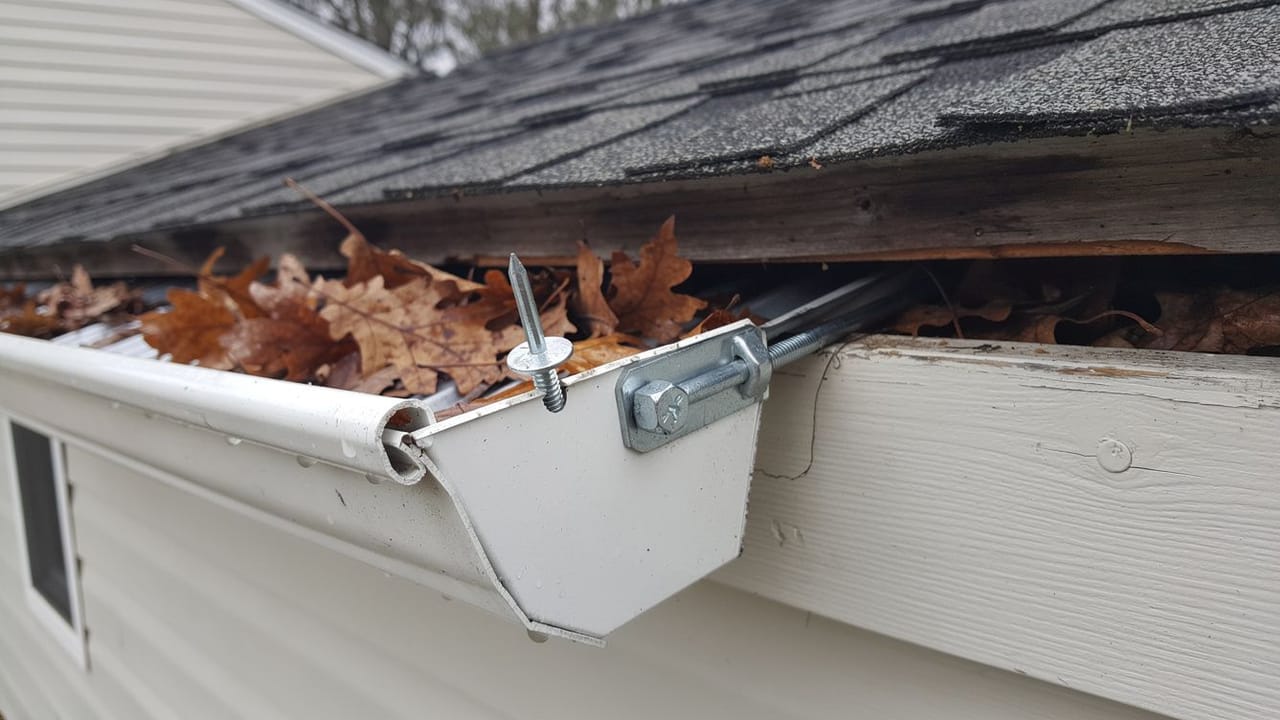
From the yard it looks like the gutter is falling off: a stretch tipped forward, a gap of bare wood showing between the back of the gutter and the board it hangs on, and water pouring over the back edge instead of the front. The gutter itself is rarely what failed. Something that was supposed to hold it to the fascia let go, and the reason it let go decides the fix. This is how our gutter repair crews read a run that has pulled loose, what the manufacturer says about spacing and fastening, and when the same gutter can go back up.
What makes a gutter pull away from the fascia?
A gutter pulls away because the fasteners holding it to the fascia have lost their grip, and that happens in one of three ways. The fastener itself backs out of the wood, which is the usual story with a long spike driven through a ferrule and held only by friction. The wood around it gets soft, so even a good fastener has nothing to bite. Or there are too few hangers along the run, and each one is carrying more than it can over years of storms.
The load is mostly water. The U.S. Geological Survey’s Water Science School page on water density gives water at 70°F as 62.3 pounds per cubic foot. A cubic foot holds about 7.48 U.S. gallons, so a gallon weighs roughly 62.3 ÷ 7.48, or about 8.3 pounds. Five gallons standing behind a leaf dam is then about 5 × 8.3, or roughly 42 pounds, hanging on whatever two or three hangers sit nearest to it. A run that is clogged, or that has lost its pitch so water pools in a low spot, keeps that weight on the same few fasteners long after the rain stops.
A pulled section and a sagging one tend to feed each other. Once a stretch drops, water collects there, the extra weight pulls the next hanger, and the low spot gets longer. If the run overflows even when it is clear, that is a capacity or pitch question, covered in gutters that overflow even when clean.
What hanger spacing holds a gutter in place?
The Amerimax installation instructions for metal gutter systems call for one hanger every 24 inches, or every 18 inches in heavy ice and snow areas. On a standard 10-foot length that works out to 120 ÷ 24, about five hangers at the wider spacing, and 120 ÷ 18, closer to seven at the tighter one. The same sheet has the older nailed fascia brackets set every 24 inches along the guide string.
Middle Tennessee sees an ice storm some winters, not a long season of heavy snow, so most runs here are hung at the 24-inch spacing. Where a house has a history of ice building up along the eaves, the tighter spacing is the cheaper insurance, and our post on ice and gutters in Middle Tennessee winters covers what freezing water does to a run. A gutter that pulled loose with hangers four or five feet apart was underhung from the start, and on a gutter repair visit we add the missing hangers rather than putting it back on the same holes.
Spikes, hidden hangers and roof straps
The Amerimax sheet describes each of the common ways a gutter is held, and they behave differently over time.
- Spike and ferrule: a tube (the ferrule) sits inside the gutter, and a spike or screw goes through the face of the gutter, the ferrule and into the fascia board. With a smooth spike, the hold is whatever friction the wood gives it.
- Hidden hanger with screw: a bracket clips inside the top of the gutter, and a ¼-inch hex head screw is power driven through it into the fascia. The threads are what hold.
- Hidden hanger without a screw: the same bracket, fastened with nails or screws supplied separately.
- Hidden hanger with roof strap: the strap runs up under the roofing, and the instructions say to use it only where there is no fascia board.
Can a gutter that pulled away be reset instead of replaced?
Often, yes, if the gutter is still straight and the fascia behind it is sound. A run that has only tipped forward on loose spikes can usually come down, have the old fasteners pulled, and go back up on new screwed hidden hangers at the right spacing, driven into fresh wood beside the old holes rather than into them. A gutter that has kinked, split at a seam or bent at the front lip is a different job, and so is a run where the hangers have torn the back of the gutter.
The first step in the Amerimax instructions is to take the old gutter down and inspect the fascia board, and replace it if needed. That order matters. If the board is soft, screws pull out of it as readily as spikes did, so a reset over rotted wood fails the same way. Our post on fascia rot behind the gutter walks through how that wood is checked and replaced, and our fascia and soffit service handles the board itself when it has to come out.
Going back up, the run is set to a string lowered about ¼ inch for every 10 feet toward the downspout, per the same sheet, and slipped under the drip edge where the roof has one so water off the shingles lands in the gutter and not behind it. The EPA’s brief guide to mold, moisture and your home lists cleaning and repairing roof gutters regularly among the ways to keep moisture under control, and a run that has pulled away is putting water straight down the face of the fascia and the wall below it.
If a stretch of gutter on your house has tipped forward or opened a gap at the fascia, we can tell you whether it can be reset or whether the wood behind it needs work first. Homeowners in Franklin, Nashville and the towns around them can ask for that through a free estimate.
Sources
- Amerimax Home Products, Installing Metal Gutter Systems (installation instructions) — One hanger every 24 in. or every 18 in. for heavy ice and snow; hidden hanger with ¼ in. hex head screw; spike and ferrule; roof strap only with no fascia; inspect and replace fascia first; ¼ in. slope per 10 ft.; slip gutter under drip edge.
- U.S. Geological Survey, Water Science School, Water Density — Water at 70°F weighs 62.3 pounds per cubic foot, the basis for the per-gallon weight worked out in the post.
- U.S. Environmental Protection Agency, A Brief Guide to Mold, Moisture and Your Home — Lists cleaning and repairing roof gutters regularly as part of moisture control.
FAQ
Gutter Pulling Away From the House: Hangers and Fascia — questions
Why is my gutter pulling away from the house?
Its fasteners have lost their hold on the fascia. A spike backs out of the wood over the years, the board behind it softens so nothing bites, or the run has too few hangers for the water it carries. A gallon of water weighs about 8.3 pounds, and a clogged stretch keeps that weight on a few hangers.
How far apart should gutter hangers be spaced?
Amerimax’s installation instructions call for one hanger every 24 inches, or every 18 inches in heavy ice and snow areas. Most houses here are hung at the 24-inch spacing. A house where ice has built up along the eaves before is the place for the tighter spacing, and a run that pulled loose is a good time to add some.
How many gutter hangers do I need per 10 feet?
At the 24-inch spacing Amerimax gives, a 10-foot length divides into five spaces, so about five hangers. At the 18-inch spacing for heavy ice and snow, 120 inches divided by 18 is a little under seven, so closer to seven hangers. A run of 40 feet at the wider spacing takes about 20.
Are hidden hangers better than spikes and ferrules?
For holding over time, a hidden hanger with a screw has the advantage. A smooth spike through a ferrule is held by friction in the wood and tends to back out, while a ¼-inch hex head screw is held by its threads. Both need sound fascia, and neither holds for long in a board that has started to rot.
Can a gutter pulling away from the house be fixed without replacing it?
Usually, when the gutter is still straight and the fascia is solid. The run comes down, the old fasteners come out, and it goes back up on new screwed hangers set into fresh wood at the right spacing and pitch. A kinked or split gutter, or a fascia that has gone soft, changes the job to replacement.