
· Michael Blair
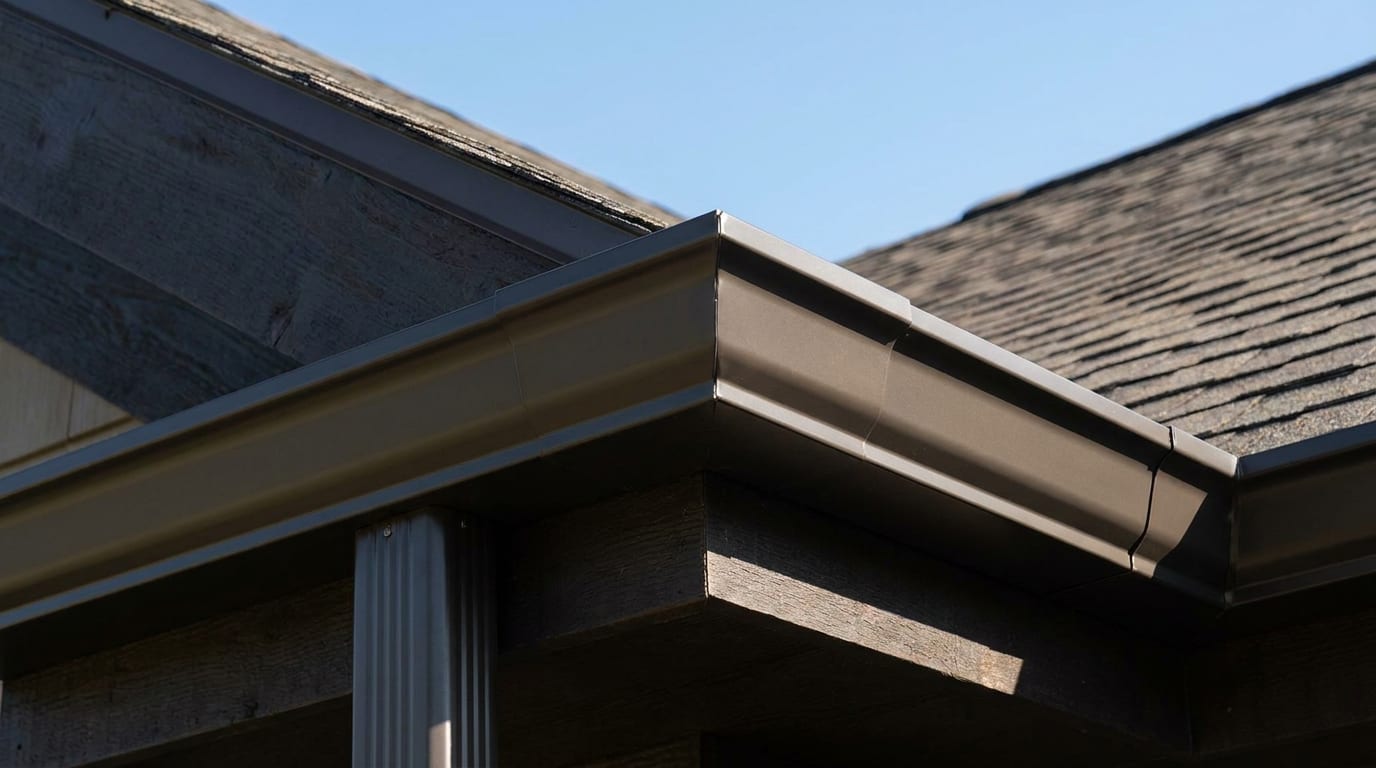
The fascia is the board along the edge of the roof that the gutter is fastened to. It is the one piece of exterior trim that spends its life behind a trough of water, and when it rots the gutter loses its grip. A gutter contractor who quotes without checking the fascia is quoting to hang a new gutter on the same soft wood, and that is why the second gutter fails faster than the first.
Why fascia rots
Water gets behind a gutter in three ways. It overshoots the back of the gutter at a roof edge with no drip edge flashing, it backs up over the rear lip when the gutter is clogged or overflows, and it wicks into the end grain of the board at every seam and miter. In all three cases it sits between the gutter and the wood where nothing dries it.
Middle Tennessee humidity means that once the board is wet it stays wet for long stretches, and fascia is often the cheapest grade of pine, end-grain unprimed, painted on the face only. The rot starts at the back and the bottom edge and works forward, so the painted face looks fine until the day a hanger pulls through.
Finding it
From the ground, look for gutters that have dropped or pulled away from the roof edge, for paint peeling or staining on the underside of the fascia, and for soffit panels that have sagged or show dark water marks. Those are the late signs. Earlier ones need a ladder: press the bottom edge of the fascia behind the gutter with a screwdriver at intervals, especially near downspouts, at corners and below any roof valley.
Soft wood, a screwdriver that sinks in, or hangers that spin without tightening mean the section needs replacing before anything is hung from it. Check the sub-fascia and the rafter tails too; rot that has reached them is a bigger job than a trim board.
- Probe the bottom edge behind the gutter, particularly at corners and downspouts
- Look for soffit staining and sagging beneath
- Check that existing hangers bite into solid wood
- Look under the roof edge for a drip edge flashing
The order of work
Gutters come off first. Rotten fascia is replaced, ideally with a rot-resistant material or with primed wood that is primed on all sides including the cut ends, and any rafter tail damage is repaired while it is exposed. Drip edge flashing is installed under the shingles so that water leaving the roof is directed into the gutter and not behind it. Then the gutters go back on, or new ones go up.
Doing it in that order roughly doubles the labor compared with hanging a gutter on the existing board, which is why some quotes are much cheaper than others. A quote that does not mention fascia condition at all is worth a question.
Keeping the new board dry
Drip edge is the single most effective detail and many older Nashville roofs do not have it. Gutter hangers that screw through the back of the gutter into the fascia should go into solid wood at the rafter locations, not just the trim board. Sealed end caps and miters keep water from wicking into the board ends.
After that it is ordinary maintenance: gutters kept clear so they do not overflow backward, and the fascia repainted when the finish starts to fail rather than after. A capped fascia, wrapped in aluminum coil stock, hides the wood and sheds water, but only if the wood under it was sound when it was wrapped and the top edge is flashed so water cannot get behind the cap.