
· by Michael Blair, Nashville's Gutters
Middle Tennessee freezes often but snows rarely. The National Weather Service’s climate normals for Nashville count about 67 days a year with a low at or below 32°F, yet only about six days with snowfall and 4.7 inches of snow in a normal year. So ice in a gutter is an occasional problem here, and a full gutter on a cold night is a more frequent one.
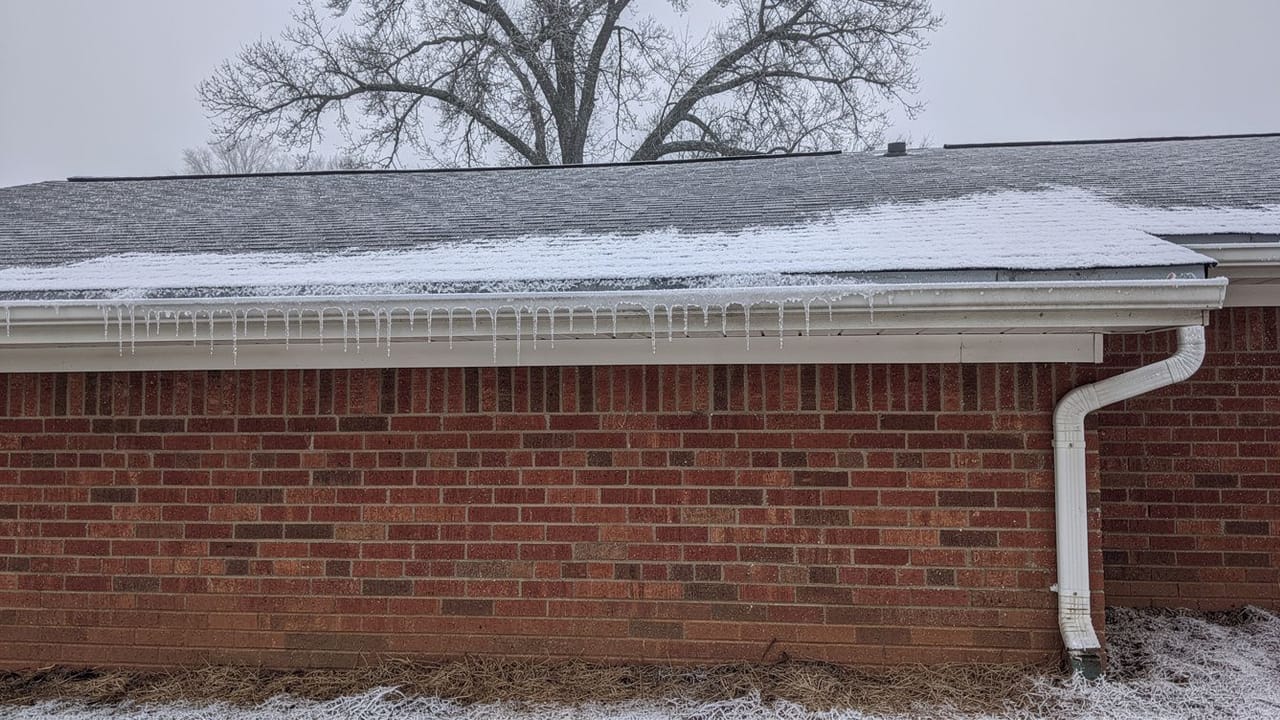
What is an ice dam?
An ice dam is a ridge of ice along the eave that holds meltwater back on the roof. ENERGY STAR’s attic air sealing guide lists ice dams in winter as a symptom of air leaking into the attic, in the same list as drafty rooms, uneven temperatures and high heating bills.
So the cause sits in the attic rather than in the gutter. The fixes ENERGY STAR describes are air sealing and insulation, and nothing it says about ice dams involves changing the gutter.
Why is the fix for an ice dam in the attic?
Combined with air sealing, attic insulation can help alleviate the formation of ice dams, according to ENERGY STAR’s attic insulation project, and the agency recommends sealing the leaks first and insulating after. Both pages say to bring in a professional when the attic has little or no ventilation, or when kitchen, bath or dryer vents blow moist air into the attic instead of outdoors.
We put heat cable at the bottom of the list. It does nothing about the heat getting into the attic, which is the part ENERGY STAR addresses.
- Air seal the attic floor, starting with recessed lights and the attic hatch
- Insulate to the level ENERGY STAR’s R-value table gives for your climate zone
- Keep insulation off soffit vents and recessed light fixtures
- Keep gutters clear so meltwater can leave
- Heat cable as a last resort, not a first response
What ice does to the gutter itself
NWS normals put Nashville’s average January low at about 30°F and its average high at about 49°F, so water left standing in a gutter can freeze overnight and thaw by the afternoon. When a run has pulled away from the house after a cold snap, we check the hangers and the board they screw into before anything else, because a gutter repair on rotted wood will not hold and the fascia has to be replaced first.
Clogs make the whole thing worse. A gutter packed with leaves holds the water that a clear one would have sent down the downspout, and held water is what freezes.
Before the first freeze
The average first freeze at Nashville comes around November 11 in the NWS record, and we like the gutters empty before it. Book gutter cleaning for late October or early November; our post on when to clean gutters in Middle Tennessee goes through the rest of the year. Confirm the downspouts run while the ladder is out.
Check the attic while you are at it. ENERGY STAR’s insulation guide says never to lay insulation over soffit vents, so shine a flashlight from the hatch toward the eaves and look for any that has been pushed out over them.
If ice or snow is already on the roof, leave it there. OSHA’s winter weather guidance tells employers to look for ways to avoid working on roofs and elevated heights at all, and to use ladders safely when clearing snow and ice. If a gutter came loose last winter, ask us for a free estimate before the next freeze.
Sources
- National Weather Service Nashville, Nashville Climate (normals) — 67 days a year with a low at or below 32°F; 6 days with snowfall; 4.7 in. annual snowfall; January normal high 49.1°F and low 30.1°F; average first freeze November 11
- ENERGY STAR, Attic Air Sealing Project — Ice dams listed as a symptom of attic air leaks; recessed lights and attic hatch as leak locations; air sealing with insulation helps alleviate ice dams; professional for little or no ventilation or vents exhausting into the attic
- ENERGY STAR, Attic Insulation Project — Insulation combined with air sealing helps alleviate ice dams; never lay insulation over recessed lights or soffit vents
- ENERGY STAR, Recommended Home Insulation R-Values — Attic insulation targets by climate zone
- OSHA, Winter Weather — Avoid working on roofs or elevated heights; fall protection; use ladders safely when clearing snow and ice
FAQ
Ice, Gutters and Middle Tennessee Winters — questions
Do we really get ice dams in Nashville?
Occasionally. National Weather Service normals for Nashville show about 67 days a year with a low at or below freezing, but only about six days with snowfall and 4.7 inches of snow in a normal year, so snow sitting on a roof for days is uncommon. When an ice dam does form, ENERGY STAR lists it as a symptom of air leaking into the attic.
Will heat cables solve ice dams?
They do nothing about the heat getting into the attic, which is where ENERGY STAR points: air sealing combined with attic insulation can help alleviate ice dams. We keep cable for a roof that cannot easily be corrected any other way.
Should I remove snow from my roof?
Rarely, in a city where the National Weather Service puts normal snowfall at 4.7 inches a year. If you do decide to, stay off the roof. OSHA’s winter guidance tells employers to avoid roof work in winter weather where they can and to provide fall protection when they cannot, and a homeowner on a slick roof has neither.
How do you prevent ice dams?
Keep house heat out of the attic. ENERGY STAR’s answer is to air seal the attic floor first, starting with recessed lights and the hatch, then insulate to the level for your climate zone, keeping insulation off soffit vents. Clear gutters let meltwater leave, and heat cable comes last.