
· by Michael Blair, Nashville's Gutters
The advice most people have heard is to clean gutters once a year, in the fall. The EPA is less specific: its guide to mold, moisture and your home says to clean and repair roof gutters regularly and leaves the interval to you. In Middle Tennessee a fall-only schedule misses the spring drop, and under a big maple that can fill a gutter as surely as the leaves do.
The spring drop
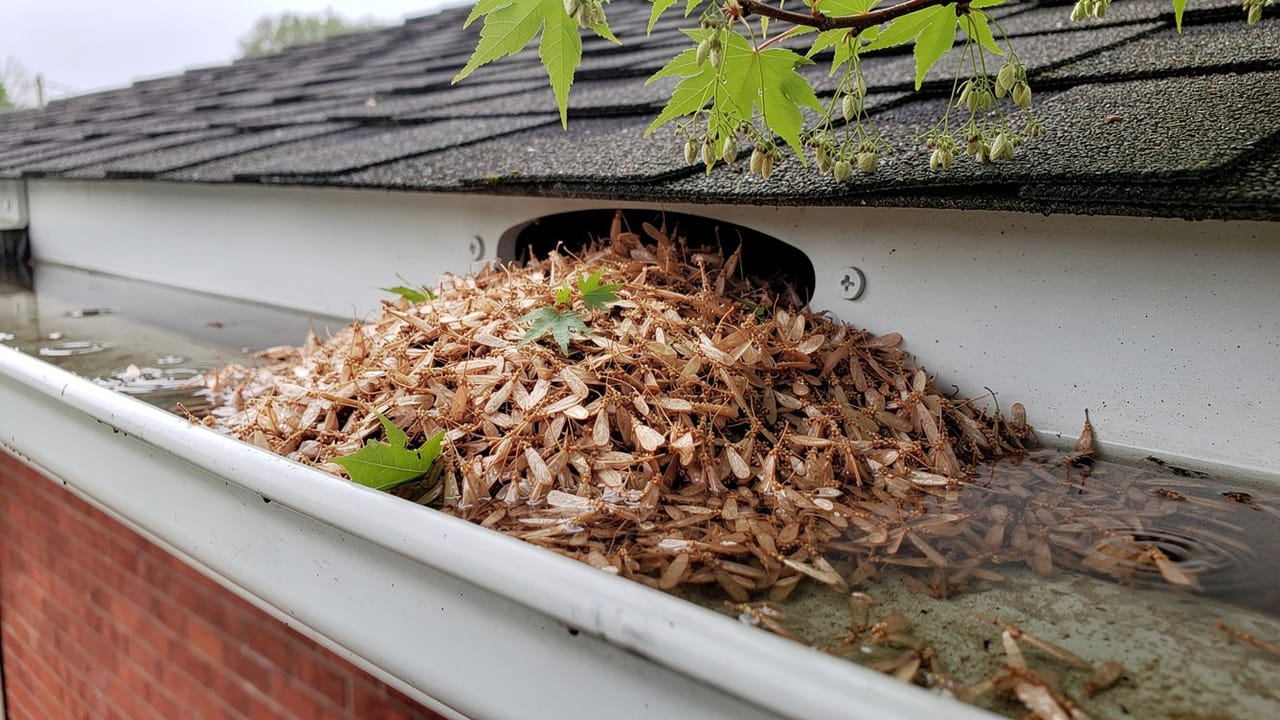
Red maple is one of the first trees to flower in early spring, and its fruit, a paired winged seed about three-quarters of an inch long, matures in spring before the leaves are fully out, according to the Forest Service’s Fire Effects Information System review of red maple. The same review says the seed is spread by the wind and that a tree a foot across can produce nearly a million seeds, so a gutter under one gets its share.
Not every maple keeps that calendar. The Forest Service’s sugar maple review has its fruit ripening 12 to 16 weeks after the flowers appear and starting to fall about two weeks later, which brings a sugar maple’s seed down months after a red maple’s.
A gutter cleaned in November and left alone until the following November can be blocked by June.
How often should gutters be cleaned here?
For most Nashville houses we recommend twice a year: late spring once the red maple seed is down, and late autumn once the leaves are. Under heavy canopy we suggest three times. Our gutter cleaning service clears the runs by hand, bags the debris and flushes every downspout until it runs, and it can be booked on that seasonal calendar.
A house with no trees over the roof can genuinely get by with once a year. If three visits sounds like too many, our post on whether gutter guards work here weighs the other route.
- Late spring, after the red maple seed drop
- Late autumn, once leaf fall is over
- A third pass in mid-autumn under heavy canopy
- Confirm the downspouts flow, not only that the gutters look clear
- After a big storm, look for debris it knocked into the runs
Why check the downspouts after cleaning?
A gutter that looks clean will still overflow if its downspout is blocked. Pour water in at the far end of the run, and it should come out the bottom of the downspout promptly.
We check the elbow at the top of the downspout first, because that is where the pipe turns and debris can lodge, and it is easy to miss from a ladder set up at the gutter. If the downspout runs but the water backs up underground, our post on telling a clogged downspout from a blocked buried drain covers the difference.
Where the overflow ends up is the reason to bother. The EPA’s mold course lists landscaping, gutters and downspouts that direct water into or under a building among the common moisture problems, and its homeowner guide says the ground should slope away from the foundation so water does not collect around it.
Safety, honestly
Gutter cleaning is ladder work, and a fall from a two-story eave is a serious one. On a two-story Nashville house, paying someone is a reasonable decision rather than an indulgence.
Our crews set the ladder on firm, level ground, keep it off the gutter itself, and move it along the run rather than reach. If you do it yourself, the same habits apply. If the roofline is two stories up or a downspout is already spilling over, ask us for a free estimate.
Sources
- U.S. EPA, A Brief Guide to Mold, Moisture and Your Home — Clean and repair roof gutters regularly (no interval given); ground should slope away from the foundation; moisture control is the key to mold control
- U.S. EPA, Mold Course Chapter 2 — Landscaping, gutters and downspouts that direct water into or under a building listed among common moisture problems
- USDA Forest Service, Fire Effects Information System: Acer rubrum (red maple) — One of the first trees to flower in early spring; samara about 0.75 inch; fruit matures in spring before leaf development is complete; wind-dispersed; a 12-inch tree can produce nearly 1,000,000 seeds
- USDA Forest Service, Fire Effects Information System: Acer saccharum (sugar maple) — Fruit ripens 12 to 16 weeks after flowering and begins to fall about 2 weeks after ripening
FAQ
When to Clean Gutters in Middle Tennessee — questions
How often should gutters be cleaned in Nashville?
We recommend twice a year for most houses: late spring after the red maple seed comes down, and late autumn after the leaves. Under heavy canopy, three times. The often repeated once-a-year schedule misses the spring drop, when red maples shed their seed before their leaves have finished coming out.
What happens if I never clean my gutters?
They overflow, and the water spills down the outside of the house and into the ground beside the foundation. The EPA counts gutters and downspouts that send water into or under a building among the common moisture problems in a home, and it says the key to mold control is moisture control.
Can I clean gutters from the ground?
Wand attachments and blower extensions can clear a single-story run, but from the ground you cannot see what they leave behind, and they do not tell you whether the downspouts drain. That takes water poured in at the top and watched at the bottom, which is how we finish every cleaning.
Is gutter cleaning easy to do yourself?
Mostly it is ladder work, and a fall from a two-story eave is a serious one. If you do it yourself, set the ladder on firm, level ground, keep it off the gutter and move it along the run rather than reaching. Finish by pouring water in at the far end and watching the downspout.