
· by Michael Blair, Nashville's Gutters
When a roof is being replaced, the gutter question comes up fast: keep the old ones, replace them at the same time, or wait and see. The answer depends less on the gutters than on the line where the roof ends. A new roof and a new gutter meet at one strip of metal, the drip edge, and at the shingles that hang past it. Get that edge wrong and water runs down the board behind a gutter that was hung perfectly. This is how that edge works and how we fit seamless gutters to a new roof.
Should the gutters be replaced before or after the roof?
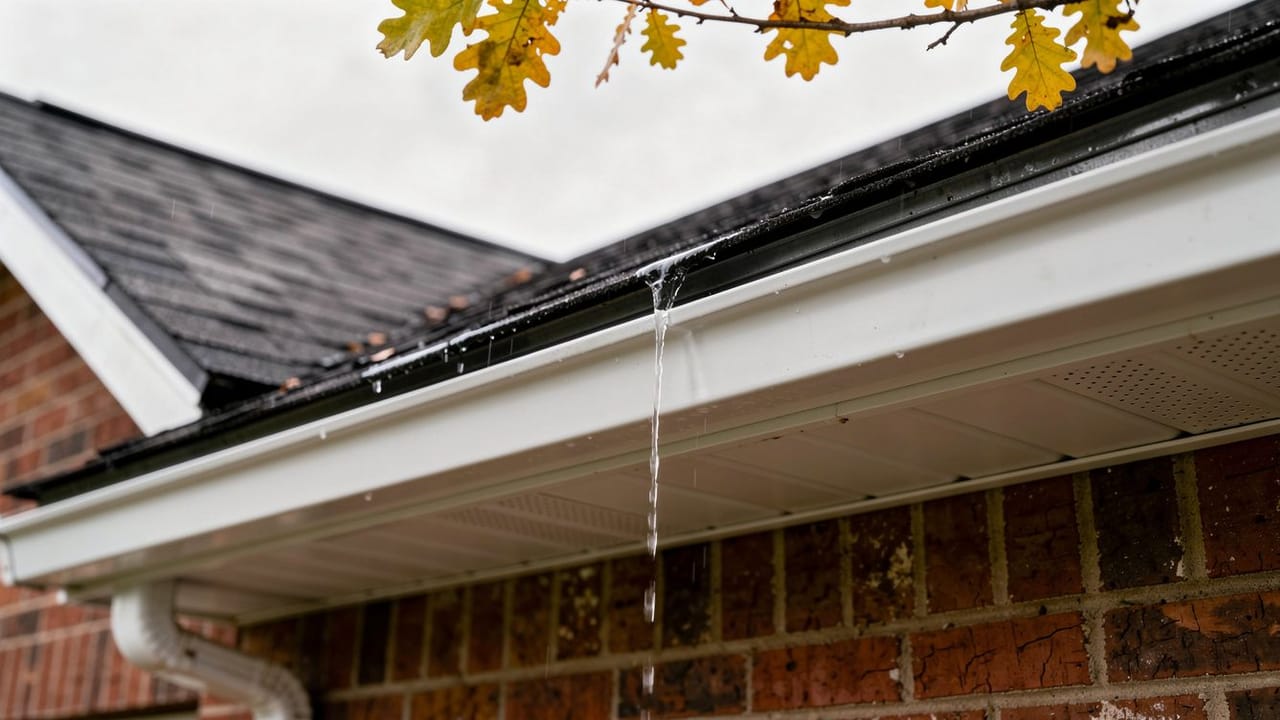
After the roof, or at the same time with both crews working to one plan. The gutter hangs on the fascia below the roof edge, and its back has to sit beneath the drip edge so water leaving the shingles drops into the trough instead of running down the board behind it. Until the new drip edge is on, there is nothing to set the gutter to, so we measure and hang a new seamless run off the finished roof edge.
If the existing gutters are sound, the right size and draining properly, they can often go back up under the new edge. If they already sag, leak at the seams or have pulled the fascia loose, replacing them right after the roof means one disruption, one look at the fascia, and a gutter set to the edge it will live with. Where the old gutters only need work, that is gutter repair.
What does a drip edge do for the gutter?
A drip edge carries water off the roof and away from the wood at its edge. The Asphalt Roofing Manufacturers Association’s guidance on installing drip edge at eaves and rakes says that without one, water can flow back onto the roof deck or the fascia, which can rot the wood. That fascia is the board the gutter is fastened to, which is why a failed roof edge often shows up first as a gutter pulling loose; we covered that in our post on fascia rot behind the gutter.
ARMA strongly recommends drip edge on all shingled roofs and notes that local building codes may require it. Along the eaves, it says, the drip edge goes underneath the underlayment, and on the rakes it goes over it. Where a self-adhering underlayment is used at the eave, the drip edge may go over that instead, depending on the shingle maker and the local code. ARMA also notes that a self-adhering strip at the eave protects against ice-dam water backing up from below, and names the gutter as one place that water can come from.
Where the shingles should end
The shingles have to carry water past the edge and into the gutter. ARMA gives a figure for roofs without a drip edge: shingles at the eaves and rakes should overhang 3/8 inch to 1 inch. Where there is a drip edge, the shingle maker’s installation instructions for that product set the overhang.
Too little overhang and water clings to the edge and works back toward the fascia; too much and, in a hard rain, water can shoot past the front of the gutter. Before we set a new run under a new roof, we look at where the water actually leaves the edge, and we hang the gutter to catch it there.
Who decides whether a drip edge is required?
The local building department does, under the code edition it has adopted. Williamson County’s adopted codes page lists the 2021 International Residential Code for residential work, effective September 30, 2024, and other counties and cities adopt their own editions on their own schedules. Whether a drip edge is required on a reroof is a question for the permit office where the house is, and a roofer pulling the permit should know the answer.
For homeowners, the useful questions to ask a roofer are short: will the drip edge be replaced, how will it sit against the underlayment at the eaves, and how far will the shingles overhang. Then have the gutters set to that edge. We hang gutters across Nashville and in Brentwood, and if your roof is being replaced or just was, ask us for a free written estimate on gutters fitted to the new edge.
Sources
- Asphalt Roofing Manufacturers Association (ARMA), Installation of Drip Edge at Eaves and Rakes (2025) — Drip edge under the underlayment at eaves and over it at rakes, or over self-adhering underlayment at the eave depending on shingle maker and local code; without drip edge water can flow back onto the deck or fascia and rot wood; without drip edge, eave and rake shingles overhang 3/8 to 1 in.; strongly recommended on all shingled roofs and may be required by local code; self-adhering strip protects against ice-dam water from below the eave, e.g. in the gutter.
- Williamson County, Tennessee, Adopted Codes — Residential permits under the 2021 International Residential Code, effective September 30, 2024; code requirements are set by the local building department’s adopted edition.
FAQ
New Roof, New Gutters: Getting the Edge Right — questions
Should you replace gutters with a new roof?
Only if they need it. Gutters that are sound, the right size and draining properly can go back up under the new roof edge. If they already sag, leak at the seams or have pulled the fascia loose, replacing them right after the roof means one disruption and a new gutter set to the new drip edge.
Does a new roof need a drip edge?
The Asphalt Roofing Manufacturers Association strongly recommends drip edge on all shingled roofs and notes that local codes may require it. Without one, water can run back onto the roof deck or fascia and rot the wood. Whether your house requires it depends on the code edition your local building department has adopted.
Why does water run behind my gutters after a new roof?
Usually because of the roof edge, not the gutter. If the drip edge is missing or set wrong, or the shingles do not hang far enough past it, water clings to the edge and runs down the fascia behind the gutter. The fix is at the edge: the drip edge, the overhang and the gutter tucked under it.
How much should shingles overhang the drip edge?
Where there is a drip edge, follow the shingle maker’s installation instructions for that product. For roofs without a drip edge, the Asphalt Roofing Manufacturers Association gives 3/8 inch to 1 inch of overhang at the eaves and rakes. Either way, water leaving the shingles should drop clear of the edge and into the gutter.