
· by Michael Blair, Nashville's Gutters
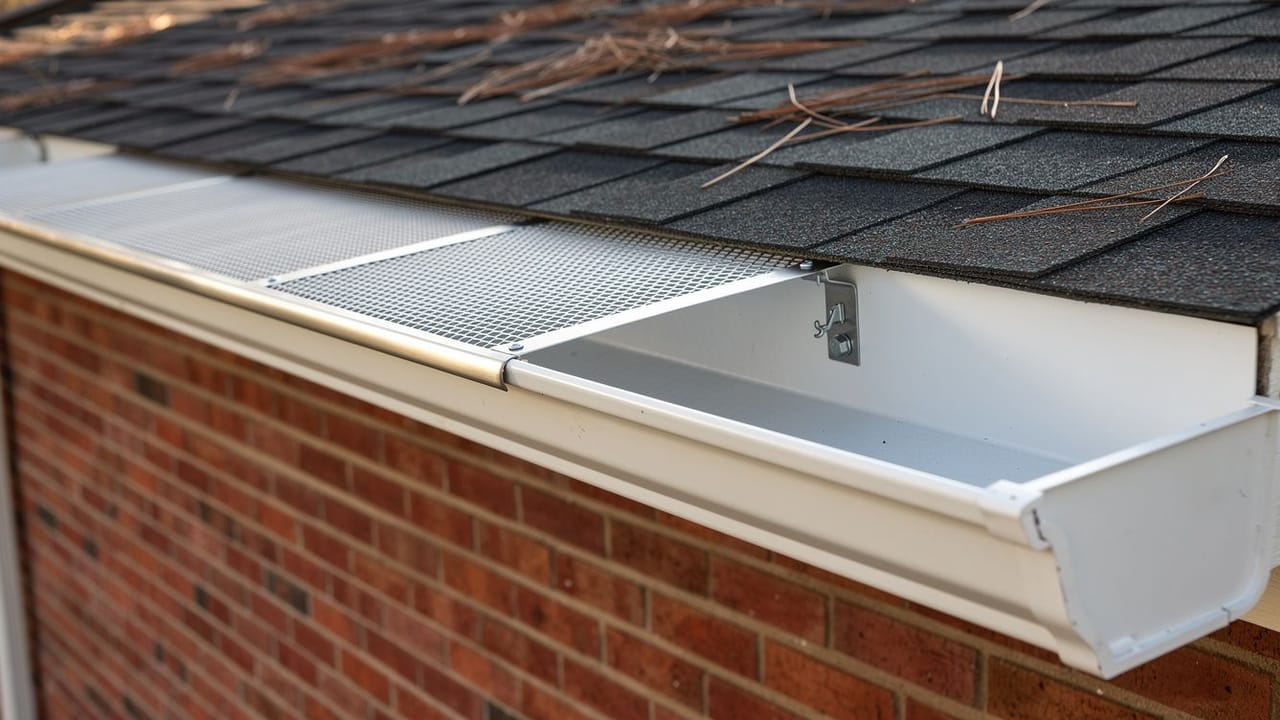
Whether guards are worth having under Middle Tennessee oaks and maples is the subject of our post on whether gutter guards work here. This one starts after that decision. The companies that make guards publish installation guides, and those guides set out what the gutter and the roof have to be before the first section goes on. We read three: Ply Gem’s guide for its Leaf Logic cover, Gutterglove’s guide for its stainless micro-mesh kit, and GutterBrush’s sheet for its brush insert. Their requirements overlap more than their products do, and most of them are gutter work that our gutter guard installation handles before a guard comes out of the box.
What does a gutter need before a guard goes on?
It needs to be empty, sound and pitched toward enough downspouts. All three guides start in the same place, with leaves and debris cleared out of the gutters and the downspouts. Gutterglove’s micro-mesh kit installation guide adds that repairs to the gutters and downspouts should be finished first, GutterBrush’s installation instructions ask that the gutters be pitched toward the correct number of downspouts, and Ply Gem’s Leaf Logic installation guide has the gutters and downspouts flushed with water before the cover goes on.
The reason is simple. A guard makes the inside of the gutter harder to reach, so a leaking seam, a low spot that holds water or a downspout plugged halfway down stays that way until someone takes the guard back off. That is why our crews do the gutter repair first: reseal, re-pitch, rehang and run water through every downspout. How many downspouts a run needs is a sizing question, covered in our post on sizing gutters for Nashville rain.
Two of Ply Gem’s notes go further than the others. It recommends downspouts of 3 by 4 inches or larger where there are pine trees, a recommendation for its own product rather than a general rule. And where a higher roof drains to a lower one, it calls for the upper gutter’s water to run inside a downspout all the way into the lower gutter.
Can a guard go over the old gutter hangers?
It depends on the hanger and the guard. Ply Gem’s Leaf Logic guide is blunt: its covers cannot be installed over strap hangers. A strap hanger reaches from the gutter up over the roof edge, and the guide has each one cut off at the drip edge with a metal-cutting saw and replaced by snap-in hangers hooked into the gutter’s front lip every 24 inches. Flat hangers and spike-and-ferrule hangers can stay under that cover.
Under the cover, the same guide adds or replaces hangers as needed so support is never more than 30 inches apart, lands the half-inch overlaps between sections at or near a hanger, and screws the front of the cover to the gutter every 24 inches. A brush insert works the other way around: GutterBrush’s sheet has the brush slid under the hangers, brackets or spikes already in the gutter, so they stay where they are. If the fasteners are loose or the fascia behind them is soft, that comes before any guard, and our post on a gutter pulling away from the house covers it.
Why does roof pitch change how a gutter guard goes on?
Because the guard is designed to shed water and debris at a set range of angles, and a steep roof would tilt it past that range. Gutterglove’s guide divides roofs at a 7 pitch. On a roof pitched from 1 to 6, roughly 5 to 25 degrees, the guard can go on at the roof’s own slope. At 7 or steeper, the mesh is bent so the guard itself sits at 5 to 10 degrees, about a 1 to 2 pitch, instead of following the roof down. Ply Gem’s guide asks for something similar in plainer words: the cover’s surface should slope slightly down toward the front of the gutter.
So on a steep roof, the answer to whether a guard should lie flat or follow the roof is neither: slightly angled, and flatter than the roof. Getting it there is part of the install, and it is one reason we look at the pitch of the roof before quoting a guard, not after.
The shingles stay where they are
Some guards are made to slide under the first course of shingles, and Gutterglove’s guide includes that method. The same guide tells the installer to check whether the roofing is stuck to the underlayment, and not to pry up shingles or tear the underlayment; where the roofing is adhered, it points to its other methods, which bend the mesh and fasten it to the gutter, the drip edge or the fascia with screws. It also warns against a guard that pushes the bottom shingle up, which it calls roof ramping.
We fasten guards to the gutter and leave the roof alone. If a guard you are weighing goes under the shingles, ask the roofer who put the roof on, or the shingle maker, what their terms say about it before anyone lifts a course. Gutterglove’s guide also says icicles and ice dams can form with any gutter guard in freezing weather, so a guard is not a winter fix.
Our crews fit guards on houses across Nashville and the towns around it; if you want guards on gutters nobody has checked in a while, send us the length of the house and the guard you have in mind, and we will look at the gutter, the hangers and the roof edge before we quote.
Sources
- Ply Gem, Leaf Logic Installation Guide (2021) — Not over strap hangers; snap-in hangers every 24 in; clean and flush first; 3 x 4 in or larger downspouts near pines; surface slopes slightly to the front; 1/2 in overlaps, fastened every 24 in, support no more than 30 in apart; upper gutters piped into lower gutters.
- Gutterglove, Gutter Guard Stainless Steel Micro-Mesh DIY Kit installation guide (file hosted by The Home Depot) — Clean and repair gutters and downspouts first; pitch 1 to 6 at roof slope, 7 or steeper bent to 5 to 10 degrees; do not pry up shingles or tear underlayment; avoid roof ramping; icicles and ice dams with any guard.
- GutterBrush, Gutter Leaf Guard Installation Instructions (file hosted by Rapid Materials) — Clean gutters and downspouts; gutters pitched toward the correct number of downspouts; brush slides under hangers, brackets or spikes.
FAQ
What a Gutter Needs Before a Guard Goes On — questions
Can gutter guards be installed over strap hangers?
Not every kind. Ply Gem’s Leaf Logic guide says its covers cannot go over strap hangers; the straps are cut off at the drip edge and replaced with snap-in hangers every 24 inches. Brush inserts slide under the existing hangers instead. Read the maker’s guide for the guard you choose, because the hanger type decides how much work comes first.
Do gutter guards need the gutter to be sloped?
Yes. A guard sits on the gutter; it does not change how water moves inside it. GutterBrush’s sheet asks for gutters pitched toward the correct number of downspouts before the brush goes in, and every guide we read starts with a clean, repaired gutter. Fix the pitch first, because reaching a low spot later means removing the guard.
Do gutter guards work on a steep roof?
They can, if they are set at the angle their maker calls for. Gutterglove’s guide lets the guard follow a roof pitched 1 to 6, but on a 7 pitch or steeper it has the mesh bent so the guard sits at 5 to 10 degrees. Ask any installer how the guard will be angled on your roof.
Can gutter guards be installed under shingles?
Some are designed to go there, but Gutterglove’s guide says not to pry up shingles or tear the underlayment, and to use a method that fastens to the gutter, drip edge or fascia where the roofing is adhered. We fasten to the gutter. Before anything goes under shingles, ask your roofer or the shingle maker.
Do gutter guards need bigger downspouts?
Not as a rule. Ply Gem’s Leaf Logic guide recommends downspouts of 3 by 4 inches or larger where there are pine trees, a recommendation for its own product. Whether a house needs larger or more downspouts depends on the roof area and the gutter, a sizing question we settle before a guard goes on.