
· by Michael Blair, Nashville's Gutters
Gutter guards are often sold as the end of gutter cleaning, and they are not that. The EPA’s brief guide to mold and moisture still lists cleaning and repairing roof gutters regularly among the basics of keeping water out of a house, and a guard does not take that job off the list. What a good one can do is cut down how often someone climbs up and how much they find when they get there, which is worth a lot on a two-story house. Here is how we think about gutter guards for Nashville homes before anyone picks a product.
Which kind of gutter guard works best here?
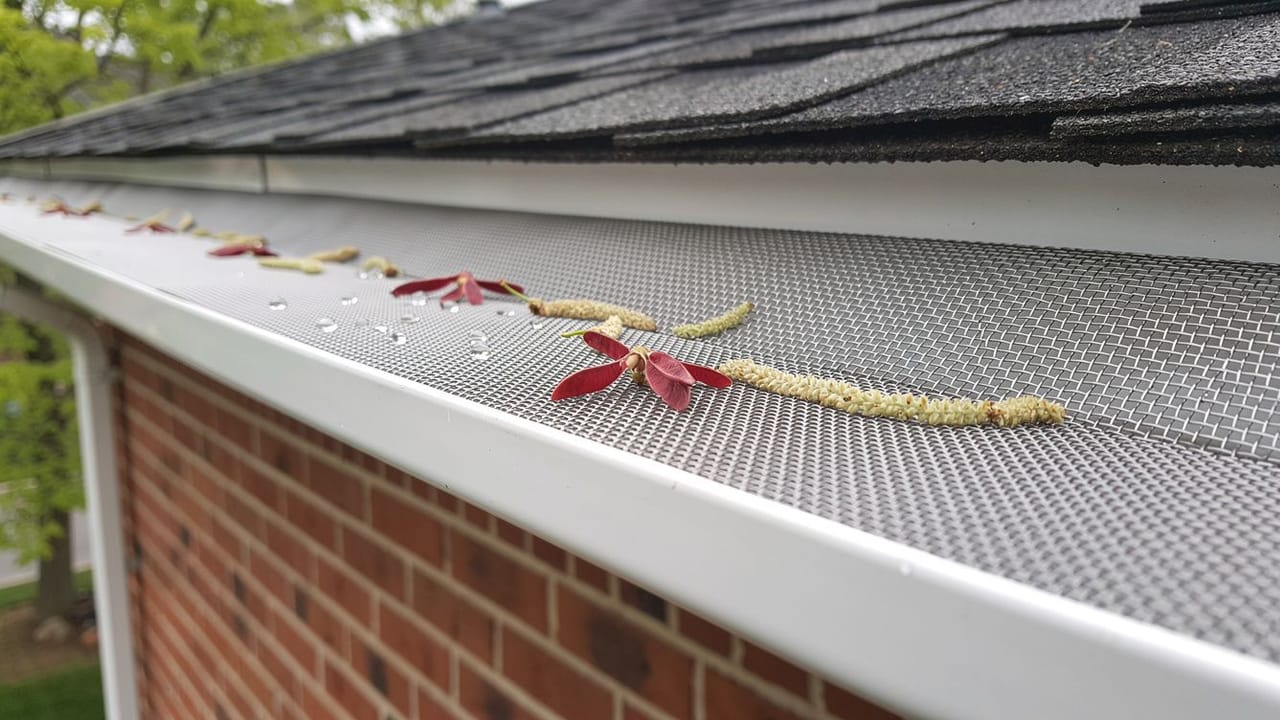
Fine stainless micro-mesh has the smallest openings of the common designs, so it stops smaller pieces than a coarse screen can, and under the maples and oaks in most Middle Tennessee yards that is the difference that counts. It still collects a layer on top that has to be brushed off.
Reverse-curve guards use a solid rounded cover: water follows the curve into the gutter while leaves slide off the front. The question here is how hard it rains. NOAA’s Atlas 14 estimates for downtown Nashville put the five-minute rate at about 5.4 inches an hour in a storm expected roughly once every two years, and at that rate some water can run off the nose of the cover instead of turning into the gutter. Foam and brush inserts sit inside the trough itself, so whatever they catch stays in the gutter until someone pulls them out and cleans them.
The pollen and seed problem
Spring is when the small stuff comes down. Red maple fruit ripens in spring before the leaves are fully out, according to the Forest Service’s Fire Effects Information System review of red maple, and the same review says trees only 2 to 8 inches across commonly produce 12,000 to 91,000 wind-dispersed seeds a year. Oaks flower in the same window: the FEIS review of white oak describes yellowish catkins, flowering from late March to May, and pollen produced in abundance.
A seed or a catkin small enough to pass a coarse screen ends up in the gutter where nobody sees it, which is why we compare the size of the openings in a mesh before the brand on the box. The bigger debris arrives later. The FEIS review of northern red oak has its acorns ripening in September and October, so a yard with both trees sends something toward the gutter in two seasons.
- Micro-mesh stainless: smallest openings, still needs brushing on top
- Reverse curve: sheds leaves, can be overrun in a hard downpour
- Foam inserts: sit in the gutter, so trapped debris stays there
- Brush inserts: catch a lot, and come out to be cleaned
- Any guard: still check downspouts and valleys
What can’t a gutter guard fix?
A guard does not make a gutter any bigger, so a run that overflows because it is too small for the roof above it will keep overflowing; our post on sizing gutters for a Nashville downpour goes through that. Under a heavy canopy, leaves and seed can also pile up on top of the guard and mat down after a rain. Nor does a guard do anything about winter ice, and our post on ice, gutters and Middle Tennessee winters explains why the fix for an ice dam is usually in the attic rather than on the gutter.
The Building America Solution Center’s gutters and downspouts guide recommends leaf guards to keep leaves and plant debris from building up in gutters, and for the screens it suggests at the bottom of downspouts it prefers flap valves, because screens need regular cleaning to keep from clogging the downspout. Nothing on top of the gutter clears a downspout that is already packed, and a blocked one backs water up into the gutter. If the overflow carries on with a guard in place, our post on clogged downspouts and buried drain lines is the next place to look.
Installation matters more than product
Some guards are made to slide under the first course of shingles. We fasten to the gutter itself, because tucking a guard under the shingles means lifting the roof edge, and a shingle maker’s installation and warranty terms are worth reading before anything goes under them. Ask any installer, us included, exactly how the guard attaches.
The gutter should also be cleaned, resealed where it leaks and checked for pitch before guards go on, since getting back inside afterward means taking them off again. If you are weighing guards for a gutter you are not sure about, ask us for a free estimate and we will look at the gutter first.
Sources
- U.S. EPA, A Brief Guide to Mold, Moisture and Your Home — Clean and repair roof gutters regularly
- NOAA Atlas 14 Precipitation Frequency Data Server, Nashville (36.1627, -86.7816) — 2-year, 5-minute rainfall intensity of 5.38 inches an hour (Volume 2, partial duration series)
- USDA Forest Service, Fire Effects Information System: Acer rubrum (red maple), Tirmenstein 1991 — Fruit matures in spring before leaf development is complete; 12,000 to 91,000 seeds a year on 2 to 8 inch trees; seed is wind dispersed
- USDA Forest Service, Fire Effects Information System: Quercus alba (white oak) — Yellowish staminate catkins; flowering late March to May; pollen produced in abundance and wind dispersed
- USDA Forest Service, Fire Effects Information System: Quercus rubra (northern red oak) — Flowering in April or May; acorns ripen in September and October
- U.S. DOE Building America Solution Center, Gutters and Downspouts — Leaf guards over gutters to prevent accumulation of leaves and plant debris; downspout screens require regular cleaning to avoid clogging
FAQ
Do Gutter Guards Actually Work in Nashville — questions
Do gutter guards mean I never clean gutters again?
No, and any company saying so is overselling. Under mature Nashville hardwoods, even a fine mesh guard collects seed, catkins and leaves on its top surface that need brushing off, and the downspouts still need checking. A good guard cuts down how often someone has to climb up, which matters most on a two-story house, but it is not zero maintenance.
Which gutter guard works best under oak trees?
We lean toward fine stainless micro-mesh, because oak catkins and maple seeds are small enough to slip through coarser screens. The size of the openings is the specification to compare first, ahead of brand or frame material. Expect to brush the top in spring when the oaks flower and again after the fall leaves and acorns come down.
Can gutter guards damage my roof?
A guard that slides under the first course of shingles has to lift the roof edge to go in, and that can run against the shingle maker’s installation and warranty terms, so read them first. A guard fastened to the gutter itself avoids the question. Ask specifically how it attaches before agreeing to the work.
How do you clean gutters that have guards?
Brush off what collects on top of a mesh guard, and check the downspouts below it, since nothing on top clears a packed one. Foam and brush inserts sit inside the trough, so they come out to be cleaned along with whatever they caught. Getting inside a covered gutter means taking the guards off again.